
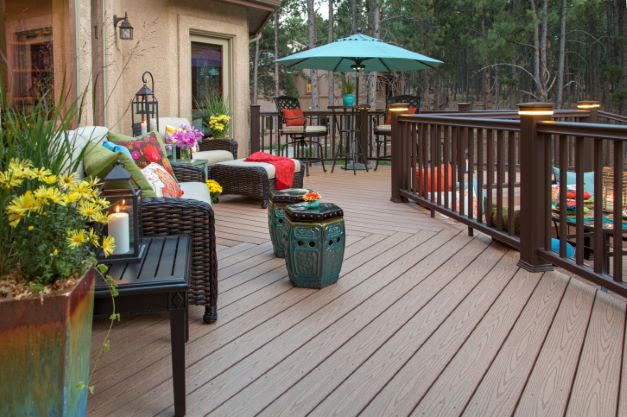
Here are some tips for choosing between composite and wood decks.
Planning a new deck or updating an existing one often starts with an important decision: choosing between composite and traditional wood decking. Both materials can create a welcoming outdoor space, but they differ in maintenance, durability, appearance, and long-term value. It is important to choose the right deck material for your location and lifestyle to ensure the structure lasts as long as possible. Here are some tips for choosing between composite and wood decks.
Maintenance Requirements
Maintenance is one of the most noticeable differences between wood and composite decking.
Wood decking requires regular care to maintain its appearance and performance. Exposure to sun and moisture means boards typically need:
- Deep cleaning to prepare the surface for refinishing
- Sanding to smooth rough or weathered areas
- Refinish with stain or sealant to restore protection and color
As a wood deck ages, this maintenance cycle often becomes more frequent. On the other hand, composite decking eliminates many of these ongoing tasks. There is no need for staining, sealing, or sanding. Routine care is typically limited to simple cleaning with soap and water.
No refinishing or surface restoration is required. For homeowners who prefer less maintenance, composite decking offers a clear advantage.
Durability
Decks must withstand changing weather conditions, daily use, and seasonal temperature swings.
Wood performs well when properly maintained, but it naturally absorbs moisture if left unprotected. Over time, this can lead to:
- Warping or cupping
- Splintering and surface wear
- Insect damage and decay
Composite decking is engineered for outdoor durability. Boards are designed to:
- Resist rot and insect damage
- Reduce moisture absorption
- Maintain durability through seasonal changes
Composite products are built for tough environments, helping maintain both appearance and reliability over years of use while minimizing maintenance demands.
Visual Appeal
Wood decking provides a natural, authentic look with unique grain patterns, but its appearance changes over time. Without regular refinishing, color fading and weathering are expected.
Composite decking maintains its finish with minimal effort, resisting fading and common outdoor staining. It also offers options that naturally weather to a softer, wood-inspired look, giving homeowners flexibility between consistent color or a more natural, aged aesthetic—without the upkeep requirements of traditional lumber.
Sustainability
Sustainability is an important factor in decking decisions. Wood is renewable when responsibly sourced but often requires chemical treatments and periodic replacement depending on climate and maintenance practices.
Composite decking typically incorporates recycled materials and reduces reliance on coatings and chemical maintenance products. It uses a blend of recycled and engineered materials to create long-lasting, low-maintenance decking.
Long-Term Value
Wood decking often has a lower initial cost, making it attractive for budget-focused projects. However, ongoing expenses can accumulate over time. Typical wood-related costs include stains and sealers, maintenance tools, and repairs or board replacement.
Composite decking requires a higher upfront investment but reduces long-term maintenance expenses significantly. It doesn’t require staining or sealing, and needs fewer repairs over time.
Trust Eastern Shore Porch and Patio
When you embark on your next project for your property, trust Eastern Shore Porch and Patio to help. We service Bethany Beach, Ocean City, Lewes, Salisbury, and the Delmarva area. You can request a quote today! If you have questions or concerns, call us at 302-436-9520 or send us an email at info@esvinylproducts.com. For updates and ideas, follow us on Facebook, Twitter, LinkedIn, and YouTube.